Showing posts with label bullying. Show all posts

12 November 2016

This is what my silence wrought.


Thirty-four years ago, I was called a swamp rat.

Thirty-four years ago, I was told to get back on the boat.

Thirty-four years ago, my church harbored racists who spoke these words.

And I was silent. I protected my white family from the ugliness.

Twenty-nine years ago, I lay half dressed on a bed.

Twenty-nine years ago, I felt dirty and used.

Twenty-nine years ago, the frat house I thought was a haven held sexual predators.

And I was silent. I protected the white men who I thought loved me like a little sis.

Four years ago, a studio mate told an inappropriate joke.

Four years ago, a studio mate slapped my butt in the empty studio.

Four years ago, the space that I saw as my solace became tainted.

And I was silent. I protected a white man I had thought was a friend.

Two years ago, at a gala, a man sat next to me and my husband.

Two years ago, this white man reached over and touched my cheek with his palm.

Two years ago, a nice evening turned sour.

And we were silent. We decided this white donor was too important to humiliate.

Four months ago, my son walked the two blocks from the bus stop to our home.

Four months ago, my son was stopped in his neighborhood.

Four months ago, a white man walking his dog asked my son what he was doing here.

And he was silent. He walked with his head down and picked up the pace.

Every school day, my son faces bullying.

Every school day, my son hears words like “rice fag.”

Every school day, my son dreads facing these white oppressors alone.

And he is silent. 

Now, I am no longer silent. We tried to be good, kind, quiet … the model minority.

We have watched our Black brothers and sisters die in front of our eyes, and we have walked beside them in protest. I hoped a white woman would save us, but white supremacy is stronger than we realized. The hold that racism has on the United States has taken my church, my white adoptive family and the public places we once thought safe.

So for now, we huddle at home. I hold my children close as they call America the land of Jim Crow and The Purge. What else can we do?


11 November 2015

Korea: Marriage, White Privilege and Bullies

Marriage is hard. It’s exhilarating at first; then the relationship slides into routine. Add children, and it shifts from the couple to the kids.

As an adoptee, this is bliss until the moment you realize you have some deep-seeded racial identity issues. It isn’t that I didn’t know I had them, I knew I wanted to be white. But I never felt strong enough to speak for myself, so I stayed silent, dated only white guys and you know the rest of that story.

The strength in our marriage is that we are able to adapt and learn. Sometimes, the learning is hard for both of us, as we learn that we are the two extremes that play out in our children. Many times, I get frustrated and angry without explaining why. That is truly tough on my husband.


Monday, he took the day off so that we could take a much needed family break at Lotte World Adventure, “the largest indoor amusement park in the world.” There was joy and excitement. We were taking selfies and “wrecking noobs.”


No one spoke English, and we often wandered around not really knowing what to do. Of course, as usual, when we tried speaking or ordering, the cashier would always look to me and talk to me in Korean. Then, my sheepish voice would reveal that I was an American. That’s a running theme here … Korean women speaking for the family as a whole. But my voice is again silenced in that role.

My husband can speak English, and Koreans rush to help him and find translation. Or they just throw up their hands and make a face.

Two distinct things happened to us that day. We learned about white privilege in Korea, and how it isn’t the same as just plain bullying.

The first incident happened as we waited to give one another whiplash on the bumper cars. As we inched up to the front of the line, the ticket woman asked us how many we had in our party. My husband held up his four fingers. She counted and allowed the two women behind me to enter and take the last two remaining cars. This, of course, sparked our families competitive side.

We watched for the fastest, most responsive cars and yelled out to one another what car we were eyeing. It was sheer family fun! As the last group cleared the track, my husband, son and daughter began to rush toward the cars, but the ticket taker stopped me at the gate and asked for my ticket. She hadn’t asked my husband for his ticket, and my ticket was in my husband’s pocket.

I called his name once, louder a second time and then I shouted his name in panic the third time, telling him I needed my ticket. He was trying to seat himself in his car, so he was a bit perturbed that I had yelled at him. He showed my ticket, and I was allowed to enter the arena.

My head was spinning. “Hadn’t she just a few minutes before counted us as a party of four? And why would she separate me from my family?” I felt stupid and less than. Once we got off the ride, my daughter sulked saying she was embarrassed by what had happened … Mom yelled and Dad was visibly irritated.

I apologized, and we moved on to our next adventure. But as we waited again for the next ride, we had the same thing happen. This ride took families, so we were once again counted. When my husband gave the young woman our four tickets, she questioned where the fourth person was, and my husband had to point out that I was his wife.

There are many things I have tried to rationalize … “maybe the Korean women hold the tickets, maybe my kids look more like my husband and less like me, maybe I just do not look like I belong in my family.”

As we took off in our fake hot air balloon, I let my family know how I was feeling. This second time, they came to the realization that I was indeed not seen as part of our family. I was othered, and it stung just as it always does.

In the old days, when I spoke to adoptive parents and social workers, I advised them to make sure they had put themselves in a situation where they were the minority. But that day, I realized that even if a white person is the minority, he or she still holds white privilege and is afforded things based on that role in our world. 

When my husband and I lived in Rwanda, we were in the minority, but he was viewed as superior, and I was inappropriately touched and questioned by teenage soldiers. As a Korean woman, I feel less than no matter where I am. Most times, I am a lone Asian woman, so there are no allies. In my aloneness, I am quiet and try to blend into the background.

Having said this, I want to tell you what happened next. Our last ride was a Magic Pass ride, so we we were able to miss some of the queuing. Once we got to the final part of the line, I noticed two teen boys behind us staring at my son and making rude gestures about him. They were looking at my son, making faces and laughing. When I realized what was happening, I began to stare at them with disdain. They noticed my stare and began to hide behind others in line between us.

Feeling that I had stopped it before my son noticed, I moved my gaze to the front of the line. Here I witnessed a group of eight teenage boys. The most attractive one wore a white shirt and a Kpop hairdo. He was making fun of my husband’s nose. Using his hands, he acted as though he had a large nose and made odd gestures with his eyes too. The other seven laughed and looked back at my family.

Again, I stared at them, showing my disgust. They, too, looked away and hid. They would quickly glance to see if I was still there, and my laser gaze met theirs. I wanted them to feel ashamed and scorned. I whispered to my husband that this was happening so that he could stare at the eight in front of us, and I could stare at the two behind.

Once that ride was over, so was I. We left Lotte World and moved to our favorite restaurant. We arrived to the cheerful staff who always serve us. They were chatty and friendly. Dinner time is our family time to discuss our day. My husband opened with discussion about the eight boys. He asked me if I wanted to tell the story.

But I began with the story of the two boys. My husband asked why I started with that story, but I felt our son needed to know he was being targeted as much as he needed to know that his father was targeted too. You see, in my mind, these were not instances of racism against my husband as a white man, but instances of bullying. The boys would make fun of anything different, and it wasn’t based on a power structure.

My kids understand so much already about racism and bullies, it seems fair they know the full story. They see their parents disagree, discuss and assess together. It isn’t always pretty, but they know we love one another and that disagreements are not cause for divorce in our family. There is respect. While it may take us time to fully understand, we work to see the other’s side.

We have a few more months here in Korea. I doubt this will be the last day we will need to detox, but boy, was it a doozy.

24 May 2015

The Twinkie Chronicles … The Isolation Tank


This girl. She sat in the classroom, mostly alone between two seas … one black and one white. Listening … always listening.

Giggles would explode from one group or another. I would often laugh with the white girls, in hopes of “fitting in.” But when the tables turned and either group would make an Asian slight, I was utterly alone … and left laughing nervously with everyone, hoping it would end.

Recently, at the American Adoption Conference (AAC), I had a similar experience that Lost Daughter sister, Amira Rose documented. It went like this …
“Whoa, there was a hospitality suite? How did I miss that?!” (This was me, joking.) 
“Yes, we have been waiting just for you to arrive!” exclaimed the black bartender. I returned his warm smile and said a “thank you.” But then from the only other couple in the room … 
“Can’t you read?” asked the white man, deadpanned.  
“Yes.” I replied. 
“It was in here the whole time. Did you not read this?” he says as he points to the conference schedule book. “I mean, you appear to be an educated woman … ” There was a slight smile and hushed giggle from the white woman. At this, I just needed to flee. I had been here before. 
When discussing the many incidents at this predominantly white conference, I messaged this incident to Lost Daughters founder, Amanda Woolston. I had already heard excuses about why the man was “defensive,” how I needed to get a tougher skin and how I needed to get out more. But Amanda changed me. She said the words no other white person had ever said, “If [you] were white, would he have felt so free to be rude, specifically question [your] abilities and intelligence? The power imbalance of a white male speaking that way to a woman of color in a space where most people are white is incredibly hostile and racist.” When I read her words, I sobbed uncontrollably.

My perforated soul … each blow pierces my heart and bruises my self worth. Each time someone says something demeaning, I shrink … go into my hidey-hole. 

At the AAC, my fellow adoptee Lost Daughter sister, Angela, asked why I laughed nervously sometimes. I couldn’t really answer her. She then said, “You seem fragile.”

I am. I was. I have always looked at women like Angela and wished that I could feel as strong and empowered, like the united front of black girls from my high school with their confidence and bravado. In the 1980s, I longed to emulate them and Lisa Bonet. Having finally secured a job where I could buy clothes, I began to morph into Denise Huxtable. I shrank from the white girls group that I had once coveted. I found my isolation tank.


The most validating moments of my senior year in high school came from the black girls. They wrote me beautiful, sincere notes in my yearbook.


In the Dear Wonderful You video, I speak of this cyclical self I created. Over and over again as I entered a new environment, I began my cycle as an outgoing, white wannabe. I did whatever it took to assimilate. Polo shirts … check. Join a fraternity little sis group … check. Be the graduate school student representative on committees … check. 


But none of this worked. The off-hand comments, the “you almost look normal,” the references to Yoko Ono or Connie Chung, the tokenism of being the “model minority” … all served to place me below the white privilege. Eventually, I would shrink and hide. 

In this solace of aloneness, I would find my voice again and reemerge strong, yet guarded. Each new environment or new acquaintance began the cycle again. 

Today, Twitter has allowed me the freedom to speak strongly and hide, while here on my blog, I reveal more of my vulnerabilities. Having these two parts of myself is exhausting. 

Each tweet or means of speaking out gives me so much validation and relief, but then, the adoptee guilt and adoption loyalty set in. In public spaces, I use walls, podiums and my reading glasses to separate myself, protect myself and hide in the open. I use laughter and my comical façade to mask my pain and humiliation.

As the Lost Daughters take to the road and do more speaking engagements, I fear the notice. I hide in my room. I realize I like the loneliness and isolation. It’s comfortable and safe.

And yet, I know that by hiding I am not claiming my space to be heard.

The valve on the radiator has held back long enough. There have been long pshhhhhhhhts and short, angry spurts of steam. Pressure is building.

This cartoon from Empathize This illustrates what is brewing in many of us.


Shared with permission from Empathize This.


24 April 2015

The Twinkie Chronicles … Dear Mr. White …

Mama Bear is pissed.

I handled the abuse as a young adult Twinkie; I handled the racism. For so long, I have awkwardly smiled when faced with horrible comments and micro-aggressions.


But inside, it ate away at me. I vowed to minimize this for my children. Now finally, the trauma of my high school days has hit home with my son inheriting my discomfort.

So, here I give you my thank you note to white America.

Thank you, Mr. White …

… for the title of “Oriental;”

… for passing down to your children the hurtful words I thought would eventually disappear;

… for the glorification of your learning that “other language” and not understanding why native speakers, hoping to save their children from their stigmatized accent, refused to speak this language you covet in their homes;

… for the separation of my fellow adoptees from their parents who you deem unfit because of the poverty your privilege costs;

… for accusing me of hurting your feelings when I use the word “white” in a general terms (Really, it isn’t about you personally. Everything isn’t always about you, but I understand your white fragility.);

… for showing me how you know best because you control the media; 

… for using our Black President as a means to appease me;

… for stopping my black and brown brothers because they “all look the same;”

… for feeling you own my black and brown sisters’ hair (It is beautiful, but no, you shouldn’t touch it!);

… for assigning me the general term, Asian, when you want to be thought of as German, English, Irish, Italian, Caucasian (Are you really from the region of Caucasus?), etc.;

… for butchering my Puerto Rican name;

… for downplaying racial bullying by comparing it to other forms of bullying;

… for pitting me against black and brown people;

… for confusing me with my Taiwanese and Chinese friends because we “all look alike” (Insert your laughter here.);

… for more and more white movies (How many times do we need to see yet another Cinderella rendition?);

… for judging my curriculum vitae solely on my Puerto Rican name; 

… for asking me if I need an interpreter (Um. I am speaking English to you over the phone.);

and finally, for instilling so much internal conflict and fear within me and my children for simply just being non-white.

Sincerely, 

Your faithful Twinkie


19 March 2015

The Twinkie Chronicles … Facebook Follies.

Over the holidays, I hosted my Puerto Rican cousins in balmy Wisconsin. After promising them snow, I failed. It was the warmest, snow-free Christmas since our move to Madison. We, of course, had moments of laughter and took lots of selfies!


On the advice of my dad, I took my cousin shopping. A Gonzo tradition … family shopping. We took everyone to the shops. Even here, I saw the underlying racism. My cousins speaking Spanish or broken English brought employees lurking around the corners … while I tried to establish normalcy by speaking loudly in English and flashing my proxy-white-privilege card.

We had a grand time catching up and FaceTiming my dad. 

Coming down from my family high, I checked my facebook feed. And …


Wow. Facebook can be such a downer and a life lesson.

16 March 2015

The Twinkie Chronicles … Bullies Galore

“Stop dragging your feet.”

“I wish you would wear clothes that fit you.”

“Don’t slump. Stand up tall with your head up. You are making yourself out to be a victim.”

These words from my mother are replaying in my head, as I watch my son move into his high school days. When you are belittled, you try to make yourself smaller. My mother did what she thought was right and helpful; she also supported me when I dyed my hair and cut it wildly to distract from my otherness. I find myself doing the same for my son, and I am sure one day, he will revive my missteps.


I worry that my son will inherit the low self-esteem from my young adult days.

Back then, I believed that no one would want me, except to use me. I had dated men, only to have them dump me for a blonder, whiter version of myself. When I turned 21, the man I thought I would marry, became a man with a secret life and a fiancée in Appleton, WI. While I had lived my life thinking I would use men before they used me, I just didn’t. I knew my Asian self wasn’t good enough “to hold a man down” in Tennessee. I was masquerading as a white person but always reminded that I was another kind of other.

I heard:

“Do something with your hair. It’s so greasy looking.” Because I couldn’t achieve the Aqua Net Big Hair of the 1980s.

“Does your cooter look different, like is it slanted from side to side?”

“Can you EVEN see with your eyes like that?”

“So, that guy who brought you to the prom … did your parents hire him as your escort?” My high school companion in those days was a Wake Forest college man I met while waiting tables at the Cracker Barrel. He was the only person I could write honestly and expect an honest, kind answer back.


And then, there were the misnomers: “Chinese,” “Cambodian Swamp Rat,” “Jap,” “Dirty Diaper Food Eater” …

I kept many of these things from my family. When I returned home for my father’s funeral, my cousin asked me why I didn’t return to Tennessee every year. I had to be honest with her and tell her of my discomfort and how I felt traumatized when I came home. There were too many bad memories. I felt inadequate and strange in my hometown. She was floored. “I never knew this. Who would say such things to you?!” she asked. I told her that some things were said to me at church. Again, she was floored.

My white family members insist they do not see my color or race. I know they don’t and when I was very young, I tried to ignore that fact too. It worked just fine when the safety of their whiteness was within earshot, but that safety inevitably left with them.

Let’s fast forward. Today, we think we have it better. We do not. The racist comments are now more politically correct, but they are still racist. The Twinkie has begat another Twinkie. This one is more authentic but nonetheless still viewed as Asian.


We moved to liberal, “most livable” Madison, WI, in 2009.

My kids quickly became aware of the prevailing air of racism. At first, I thought they would be immune, that their father’s whiteness would save them. But just like their Twinkie mother, my Asian genes would betray them as well.

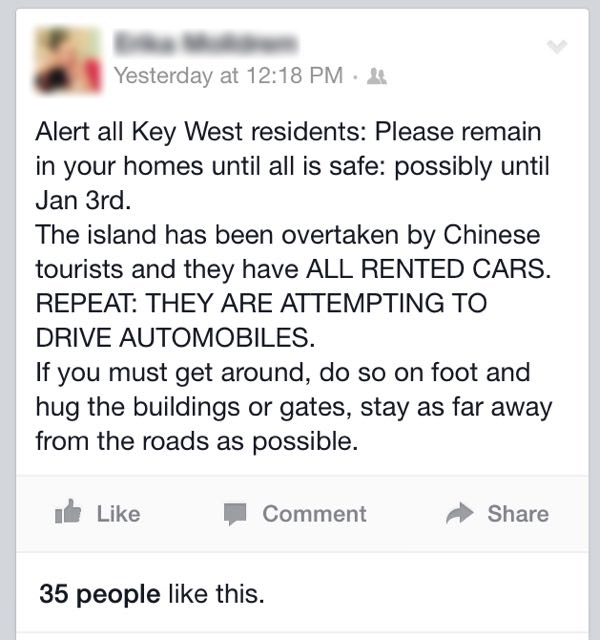
I recently found this drawing of my son’s day tucked away in his papers.


Trying to combat racist bullying is hard. Without proof (a witness or video footage) there is little the school can do to stop it. My son returns home with holes in his pants, bruises and anger. He is fearful of school.

My son’s bullies come in all colors; mine did too. I always said, “Shit rolls downhill, and I am the smallest minority.”

For me, the biggest wounds came from whites. Their superiority and power scared me. They ruled the hallways and campuses. They still do. White America continues to beat people of color down, pit us against one another. This fact was emphasized in the first episode of Fresh Off the Boat, in this line spoken by Walter, the only black kid in school, “You’re at the bottom now; it’s my turn.”

Why must anyone be at the bottom?


23 March 2014

Shame vs. Trauma

In my home state of Tennessee, a federal judge granted an injunction on the state’s gay marriage ban. It was a small victory in my eyes, and I gleefully posted an article by a local news agency on Facebook (FB). In my post, I asked out-of-state friends to read the comments so that they could understand the level of discrimination.

This brought a flurry of comments, utter disgust from non-Tennesseans, and confusion from Tennesseans. A cousin and two schoolmates felt I had misrepresented our hometown, where they still live.

My cousin was the most upset. She interpreted my comments as a sign that I was ashamed of my family and where I grew up. I understand her confusion. My days in my hometown seemed idyllic. I loved time with my family and did well in school. But there was trauma.

My mother knew it from my first day at the local elementary school. I was nine-years-old. The teacher had directed me to the lower parking lot where my mother was parked. My sister was little, so it was difficult for my mother to walk and meet me. As I walked down the hill, a group of children gathered around me. They encircled me and began chanting, “Me, Chinese. Me play joke. Me put pee-pee in your Coke!” All I remembered were large faces with eyes pulled to slants, laughing and looking down at me. I curled into a ball. 

Within seconds, my mother, toddler slung on one hip, rushed up and began screaming at the kids. She wanted names, but they scattered and screamed back, “Come get us, you big, fat hippopotamus!”

My face was wet with tears, but my mother’s was red and hot. Her anger was frightening. 

From that moment, I wanted to protect her. I kept my shame silent. Shame was knowing my family and I faced discrimination because I was different. I wanted my family to be buffered from the hurt I would endure each day, as someone would pull their eyes or make a ching-chong reference. 


So, I must admit, I was taken back by my cousin’s question of my shame. Was I ashamed of my hometown and family? No.

Traumatized by the racist comments? Traumatized by the marginalization? Traumatized by the hatred? Yes.

When I read the hate-filled comments on the recent same-sex marriage decision, it brought back the trauma of victimization. I felt the trauma of losing my friend, Patrick, to gay bashers. I felt the trauma of being discredited because of my Hispanic name. I felt the trauma of never being “normal” enough to date. 

Many do not believe this to be possible. The two classmates assured me that I would be surprised at the progress made in our small hometown. I agreed to go out with them when I returned for a visit to see it in action. But even today, I know Asian adoptees in Tennessee who suffer the same trauma I did. When you are white and local, it is difficult to see the hurt and hatred that lurks in the school bathroom or a nook in the library. I do not fault them for this blindness, but I do ask them for consideration and understanding that my lens was different from theirs.

While the conversation also meandered around a rural versus metropolitan theory, I just listened. Perhaps it may appear that racism and same-sex marriage discrimination occur primarily in rural areas, but if you are a person of color (POC) or a gay or trans person, you know differently. 

This is the year where my Twitter activism and my personal FB page have intertwined. With that, there will most likely be more discussions of race, gender, sexual orientation and adoption. My FB page will no longer be a celebration of a perfect life; instead, it will be a realistic view of my life. 

As adoption loyalty has fallen away, my shame will no longer be silenced.


06 June 2013

Teaching Moments

Yesterday, my vitals were up. Tense muscles, fast pulse, furrowed brow, and a hurting heart.

This blog post by Teaching Underground popped up on my feed. I felt he wrote sensitively about this incident.

My mistake was to go on to the YouTube video.


What struck me first was the title that BTW21News used, “City Councilwoman Hodge stands behind comments that made local student cry … .” So far, viewing the clip, I did not see a student cry. While this may have happened afterward, it weights the posting and prompts an immediate emotional response.

No one wants to be responsible for making a child cry, but I could sense her frustration and hurt in the first part of the clip as she questioned the use of a “small black person” as the “before knowledge” symbol. The subsequent interview did not serve her well, and unfortunately, the station did not interview others in the community.

That said, the community responded with comments filled with hatred, insensitivity, harsh words and more. As Teaching Underground pointed out, there were few people in support of this councilwoman’s viewpoint. No one seemed willing to put themselves in this person’s shoes.

The comments pulled me quickly back to the community where I grew up. I remember the use of the words in my neighborhood as a child. When someone was mad at you, you were immediately called, “nigger.” When others wanted to put me down, I was called “Chinese” or when they became more informed of the news, “Cambodian swamp rat.”

This became the subject of conversation last night at the dinner table. The kids and I talked about “bad words” people use to disparage one’s race. I mentioned the words used in my childhood.  As soon as I said the word, “Chinese,” my son began to tear up.  Now, I had made him cry.

The mere mention of a seemingly innocuous word had brought back words used to describe him as a kindergartner in Virginia. While this word is an ethnicity and seems harmless, an inflection can change the meaning.

While the children in the video did not mean to offend, the history of race in the South, and this Councilwoman’s personal history in Martinsville, Virginia, should not be discounted.

A friend of mine has a great philosophy which I shared with my children last night. These are teaching moments. Unfortunately for this Councilwoman, she is trying to teach in a community where her subject is not accepted. But that shouldn’t stop us from the work at hand.

When presented with the word “Chinese” used in a hateful context, my children will know to say, hopefully without tears, “Actually, I am Korean. South Korean. It is a country in Asia, and a peninsula near China, but not China.”

10 April 2013

Asian Attraction? (Part 1)

Recently, one of my new Asian adoptee friends qualified her Caucasian husband, as “not one of those men with Asian fetishes.”

I must admit, I was puzzled by this, and I questioned what she meant. She and another friend quickly explained that there were men who had Asian fetishes. This week in This American Life’s episode called “Tribes,” Act 3, tackles this subject by highlighting the filmmaker of the documentary “seeking asian female.” The outcome is surprising. (You can listen to the whole podcast below, or you can click on the link Act 3 to skip to Act 3.)


Watching the trailer for the documentary (see below),  and having heard Jennifer in the film, Adopted, talk about Asian fetishes, I began to wonder how I had been so naive.


My Asian friends and I have all married Caucasian men. While my two closest friends and I have joked about our “white hubbies,” none of us ever spoke of the Asian fetish. If anything, we all talked about our own attractions to Caucasian men. One friend’s parents often tried pairing her with “nice Taiwanese” men.

Growing up in rural Tennessee, young boys were more repulsed by my ethnicity than enamored. There would be no talk about the Asian fetish. That was unspeakable in Appalachia.

My first date occurred when I was 17. My date was a young college man from the big metropolis of Knoxville, who had been traveling back to Wake Forest, North Carolina. He had stopped at the Cracker Barrel where I worked, and I had mistaken him for a movie star. He took my contact details, and we wrote long letters. I enjoyed sharing with someone who didn’t solely see me from the outside. When he escorted me to my senior prom, a popular young woman asked me the following Monday, “So, where’d your mom and dad find such a cute escort to hire?” She couldn’t understand why an older, Caucasian man would want to take me to the prom.

Throughout my life, I shied away from Asian boys, as I had often been paired with the only Asian boy in my grade; his family moved to our town in fourth grade. That year, we studied square dancing in gym.  This was the only time boys and girls mixed for gym. I was always paired with this Asian boy. Our peers saw us as a match made by race.

Some may hypothesize that my attraction to Caucasian men is a product of being raised by parents of a different race, or a product of living in a community where the racial “pickins were slim.” They may also blame racial confusion for my seemingly Caucasian fetish. I theorize that we all have initial attractions that are based in physical attractiveness. But as Act 3 proves, those attractions are only the spark that may or may not lead to a lasting relationship.

My daughter recently asked me what attracted me to her father. My reply was that I thought he was cute. He had long sideburns, wore a denim jacket and sported a Smiths button on his lapel. That was all I needed to be attracted.


As we became more acquainted, I quickly fell in love with his optimism, idealism, humanitarianism, and finally, his dedication to wildlife. We were, as my mother would have said, “two peas in a pod.”

See Part 2 of this series, here. “Do you have to be white to have yellow fever?”


03 February 2013

The faces we are born to wear …

As I have been reading research on transracial adoptees, I am realizing that while we have similar stories to share, we also have widely varying views on adoptions. Logically, we are different people and no two of us are alike.

The interesting thing for me, is that my feelings about race align more with my first generation Asian friends (as introduced here) than with Asian adoptees.

My first generation Asian friends, Adrienne and Katherine, were Asian minorities in their childhood communities, much like me. Adrienne blogs about her small town experience:
“The moment I first appeared on the playground of my new elementary school, the noisy chatter and laughter of children at play abruptly ceased, as if someone had pushed a magic mute button. Feverish whispering closely followed the eerie hush that had suddenly descended upon the playground. Little blond heads leaned in close together as the children conferred with each other in obvious bewilderment and consternation at the appearance of this alien in their midst. Innocently, they tried to work out how my face got so very flat, whether my eyes hurt all the time, or whether one would eventually get used to the pain of having eyes like mine … ” (Read the full post here.)
Katherine recalls her childhood in this way:
“When I was growing up my grandmother used to say to me, “You may feel like you are just like them, but no matter how you feel, you will never look like them.”

I was born in the U.S., the daughter of two Asian immigrants who came here in the 1960s for graduate school. My parents disagreed on the extent of our assimilation into American culture: my father spoke to me only in English while my mother spoke to me primarily in her native tongue. My father was more adventurous in terms of eating non-Asian foods; my mother was less so. For me, there was no question—I felt 100% American and wanted to be just like the other kids, and anything that set me apart from them was a source of burning embarrassment. I begged my mother to cook American dinners like macaroni and cheese and spaghetti and meatballs, buy me the same kinds of clothes and shoes that the other kids wore, and fiercely resisted her attempts to teach me any other language that was not English. Every day at school, and while playing in the neighborhood, I saw only white children—and after a while I assumed I was one of them.

But I wasn’t. Some kids would make faces at me, pulling at their eyes until they were all squinty, pretend to speak Chinese, and laugh. Some would tease me and ask me to “say something Chinese” as if I was some kind of circus freak show. And of course there was the “Chinese, Japanese, dirty knees…” taunt that was said in a sing song-y voice. It seemed like every time I started to forget that I was different, I was reminded that indeed I was. Only when I went to college in New York City and saw first hand the incredible amount of diversity did I realize what I was:  a banana. Yellow on the outside, white on the inside.

I’ve lost track of the number of times an Asian person has approached me and started speaking to me in Chinese, assuming that I’m fluent in Chinese because of how I look.  On fewer occasions, I’ve had Caucasian people compliment me on how well I speak English, assuming that English was not my native language because of how I look. Time and time again I’m reminded of the potential disconnect between how I perceive myself and how others may perceive me. All people face this problem to some extent, but for first-generation children of immigrants who are caught between two cultures and who grew up without the benefit of racial diversity—the problem becomes especially complicated.”
Adrienne, Katherine and I are very proud Asian women. I stress the word, “women” because as I have written about in the post The Ideal Beauty, I believe some of our past insecurities stemmed from the portrayal of girls and women in the media. When young girls are exposed to blond bombshells (think Cinderella, Barbie and the girls of Teen and Seventeen magazine), we and our non-Asian peers believe that is what we should be. Asians are virtually absent from our American media culture.

My mother was fully aware of the one-sided representations. She made sure I had Asian dolls, including dolls from Japan, Korea, Vietnam and of course the Asian baby doll.


Notice, however, that my little sister clutches a blond doll. While my sister is half Caucasian, she is also half Puerto Rican. In the 1970s, there weren’t many brunette dolls, let alone Hispanic ones. My sister clutched her blond dolls until the introduction of the Darcy dolls, sporting not only a blond, but a brunette and a red-head.

While we all had our struggles with our identities, I believe that every person, adopted or not, struggles with his or her appearance intensely through adolescence and continually throughout life. Each person also resolves personal struggles in his or her unique way.
I enjoy the fact that I can text Adrienne and Katherine my photos of Asian market wares, only to find that we are having parallel experiences. (See Adrienne’s funny photographic tale here.) Their mothers are teaching them, and in turn, they teach me.

Adrienne’s parents inspire her and me. Her recent post summed up her feelings:
“At times I’ve felt like this was more their country than my own, even though I was born and raised here. Thanks to my patriotic parents, I’ve attended schools and have hung out with people who have tended to regard patriotism with suspicion – as something corny and anachronistic. I think it was only when I began to travel abroad that I realized how very much I do appreciate this country and how much there is to love about it.

‘THAT’S America,’ where nothing is impossible and where there are people hard at work making sure wrongs are eventually righted, and where there is a process to ensure that they are. That’s my parents’ America, and I’m glad to be living in it too.”
Yes, and in this country, we can freely be who we want to be … say things as we choose … even experience other cultures. That’s our America!


28 January 2013

The Road Taken

The film, Adopted, was loaned to me to start me on a journey …


The problem is, I don’t want the angry journey portrayed in this movie through the adult adoptee, Jennifer. I am not her, nor do I feel as she does. I have never felt abandoned.

I identify more with her adoptive mother who says, “I think I probably remember a lot more details about picking Jenny up from the airport than I do about giving birth to Eric.”

Yet in search of her “core validation,” this young woman continues to lash out at her parents through snide comments and hurtful rejection. She forces a journey on her parents that they have made and are ending. Both her mother and father are dying of cancer.

I understand her recollections of racism outside of the home; I lived through those same racial jokes (see examples in this post). Unlike her, I experienced these moments with my family. When children chanted racial insults, my mother rushed up and confronted them. She faced their hurtful words as they shouted, “Come get us you big, fat hippopotamus!”

From day one, we all were a part of the journey. My mother was my best friend. I shared all the hurt with her. We talked through it. The adoptee, Jennifer, did not share, and now all the pent-up 9-year-old anger has surfaced in a thirty-something young woman.

She talks of “being authentic and real,” but I pose that your reality is what you make of it. I pose that individuals are different. While every adoption story does not end like Jennifer’s or mine, there are varying degrees of acceptance, abandonment and unconditional love.

The adoption story isn’t just about the well-being of the adoptee, as Jennifer would like us to believe. If it is, in fact, as Jennifer wishes, a journey they all take together, there should be some sensitivity for the adoptive parent.

Recently I have spoken of starting an adoptee’s journey, but more precisely, it is just a new chapter in my life … one of sharing parallel experiences, laughing at similarities (like all the vacuuming and couponing), and learning new stories.

I appreciate the different stories, but my life is full of wonderful things.

My daughter recently summed it up, saying, “If you weren’t adopted, I wouldn’t be here and we wouldn’t be with Daddy.”

I am content with the road I have taken.

21 October 2012

Race Matters


“No one will date you because you’re mixed race.”

My heart sank this past week when my son told me someone had said this to him, but I hid my hurt.

I said, “Did you tell him, ‘That’s okay, because I won’t date racist people’?”

“No!  I never thought of that,” he replied excitedly, “That’s good.”

I explained I had many years of experience thinking of comebacks. Yet, this wasn’t the first time my son had experienced prejudice. At eight, he had his first bout with it as I described in this post. At the time, he didn’t seemed phased, but he admitted this week that he had held onto that memory as well.

As we talked further, he felt better. He realized that he was not alone, that his mother had grown up with the same, and that as author Eric Hoffer once said, “Rudeness is the weak man’s imitation of strength.”

I’ve spoken about some personal incidents of racism in this blog, but recently, I’ve been able to pinpoint some things for myself.

From the 1970s to the 1990s, my life was about assimilation. I wanted to be white. I wanted to blend in to the Appalachian human fabric and disappear. During those years in the South, those around me often reminded me that I was different, strange, or simply “not normal.”

My mother tried to console me when these things happened, but after time, I realized that she truly did not know how I felt. My father, on the other hand, did to some degree.  As a Puerto Rican whose English was heavily accented, he had endured his share of racism. We spoke some but rarely about it.

I have spent my life longing to “fit in” racially. In Virginia, I found my two closest friends, Katherine and Adrienne, strong Asian women. I have blogged on how they taught me a great deal about Asian culture, another crucial step in my development.

What they lacked was the experience of being raised in a family where one feels racially out of place. Enter my next step in development … meeting two adult contemporary Korean adoptees.

We are just learning more about one another. In the coming days, I hope to share with you the continuing maturation of the person I haven’t fully known … myself.

06 February 2012

Inspirational Children

Tonight, my son shared a video with me. His struggles with being happy in his own skin and his need to be accepted has been worrying me. He’s entering the age where one questions oneself and often takes on the attitudes of those around him.

As a parent, I know he must make the journey, but having gone down the same road, I know the conflicts he will face. He has faced some in the past … being called “Chinese” (not that China is bad, but it is often said in a very derogatory way). I explain that such references only means that the speaker is uneducated about the different Asian races.  While I say this as neutrally as possible to him, I cannot deny that it puts a pit in my stomach as it did when the same was said to me as a young girl.

I was called “Chinese” as well as “Cambodian Refugee,” and children would pull their eyes into slants to mock me.  In gym, I was paired with the only other Asian child, a boy, during square dances. While I struggled to just fit in, I was always reminded that I was different. I was not white, nor did I have a plain Jane name.  I wanted to blend into the background; I wanted to be white or black, for those were the two races in my hometown. I wanted desperately to fit in.

Before our decision to become parents, my husband and I talked about my childhood and what we could do to save our children from the heartaches I had felt in rural Tennessee.  We decided that we would always live in a racially diverse community. We chose the Wisconsin home we did because of the racial make-up of its public schools.

As my boy entered middle school this fall, we felt we had done all we could to make sure he would blend in. But in reality, we have learned that no matter what we do, there will be children who want to belittle others. No matter what we, as parents, have done, we cannot protect them fully from the growing pains of bullying and belittling.

What we have done is made sure that he knows that he is well-loved and that he is beautiful just the way he is. Tonight, I realized as I watched this video with him that he not only knows he’s special in his own way, but that he sees that he is not alone. He understands the lyrics of this Lady Gaga song, and he felt a kinship with this little girl.


This is just the kind of performance I needed to see … shared by my boy.

05 January 2008

“Yer not from roun’ here, are ya?”

My family made one of our few treks to Tennessee this holiday season. After being on the road for a few hours, we made our usual stop at a Cracker Barrel restaurant. As I checked out, the cashier asked, “Where are you traveling to?”

I said, “Tennessee.”

“Where are you from?” was the reply.

“Oh, Virginia.”

This short conversation got me thinking. How did she know I was traveling? I know that most Cracker Barrels host the interstate traveler. I worked for Cracker Barrel for many years through high school and college. But even in my native East Tennessee home, I often get this question, “Yer not from roun’ here, are ya?” My reply is always the same, “Well, yes, as a matter of fact, I grew up around here.”

I grew up loving overcooked veggies like fried okra, “kilt (aka killed)” lettuce and spring onions, canned green beans, chitlins, and pintos and ham hocks. I love my cousin’s decaf sweetened iced tea and her apple stack cake. But these loves are not evident when a stranger sees me. I appear as a stranger, an outsider. However, my heart still dwells in the rural hills of East Tennessee.

My Asian friends at times will remind me of my looks and my strange dichotomy. Recently, we were driving from D.C. and became lost. My husband, knowing the back roads of Virginia well, directed us out of the rural route and onto the main highway.

On our journey down the back roads, my friends mentioned a fear of breaking down in the rural area. “What if we have a flat tire?” they asked. Our cell phones weren’t getting a good reception, so I said I’d just approach a home and ask for help. Their reply was that I wasn’t a white male, but an Asian female. Did I really want to do that. From my upbringing, I realized that I was thinking in terms of my relatives and how they would help us if I approached their homes. But it was true that I didn’t appear to be from “roun’ here.”

My son is now learning that he is not a true white male. He is struggling with his identity. Classmates and strangers are calling him “Chinese boy” in a derogatory way. We live in a city that is quite diverse and yet, he is still faced with the cruelty and ignorance I faced in rural Tennessee. My husband and I have come up with this description of who he is … Anglo Korean Latino American. We explained what they all meant to him and if someone continued to harass him, to say, “Just Google it.”

In some respects, I feel a need to get back to my roots and understand what motivates people. My parents always explained to me that criticism has its roots in insecurity. We don't know the true struggles of those around us.

While I was home, I met with an old high school friend. She now teaches high school English in Tennessee. She relayed a story to me of an eighteen year old in her class. His classmates learned that he had no proper bed. He had slept on the floor of his grandparents’ home since he was fourteen. His previous bed had broken, and they did not have the money to replace it. So, he just slept on the floor for four years.

The students in his class were so moved by his need that they all chipped in and bought him a bed for Christmas this year. Kindness goes a long way.

Though we may have different skin color, different facial features, different backgrounds, we all understand emotions in the same way. We all feel hurt, sadness, happiness and joy. And we all appreciate kindness and acceptance.

27 August 2007

Mistaken identity

I never took my husband’s last name. I was too attached to my Latino name, the one given to me by my parents. In fact, I embraced their heritage as my own.

Though my mother tried to keep me in touch with my Asian side, I rebelled. I rejected things Asian and clung to things Puerto Rican and southern. In grade school, high school and college, I was often paired with the Asian boys, though I was never attracted to them. However, they did become some of my most treasured friends.

In second grade, my mother helped my brownie troop dress in traditional Korean dress and learn a Korean dance for a community international day. I still have the dress she so painstakingly made for me. I also kept a scrapbook with the Korean flag on it that she had bought on one of her trips to Korea. But in everyday life, I, too, forgot my own biological past.

However, I was often reminded. In grade school, I was teased about my eyes, and chants about the Chinese would be used to me to intimidate me. Once in college, I was at a frat party and wearing sunglasses. A brother came up to me and said, “Wow, you actually look normal with those sunglasses on.” Normal. My life was never normal, but I love it that way.

In one large college class, I sat. The professor started calling roll. He said my name, and looked around the room. He was scanning for a Mexican, a Puerto Rican, someone who wasn’t me. I raised my hand. His gaze passed over me, as if to say, “Oh, she doesn’t understand English well.” He then repeated my name again. And I had to clear my throat and say, “Um, that’s me.”

Another classmate’s mother was doing research on the make-up of our freshman college class. Her daughter was in my Spanish class and told me her mother had mentioned a Latino student who had ticked the incorrect Asian American box. She told her daughter that she would have to change the data for that student. The classmate revealed to her mother that such a young woman existed … me.

I still struggle with the race question. What box should I tick? Should I answer “yes” to the question of Latino descent? I usually tick “other” unless there is the wonderful option, “prefer not to answer.”