Showing posts with label birth mother. Show all posts

19 November 2016

Setting aside my whitish ways …

When I was a white, I talked like a white,
I thought like a white,
I reasoned like a white.

When I became Korean,
I set aside my whitish ways.

When I was a white,
I was “chosen.”

When I became Korean,
I was lost.

When I was a white,
I mourned my mother at her gravesite.

When I became Korean,
I mourned a mother in Korea.

When I was white,
I called myself, “Oriental.”

When I became Korean,
I called myself “Asian.”

When I was white,
I used the word, “Caucasian.”

When I became Korean,
I used the word, “white.”

When I was white,
I rejected the Asian men who loved me,
calling them affectionately, “brothers.”

When I became Korean,
I realized that the men I loved
were always white.

When I was white,
I dated white men.

When I was Korean,
I realized the implicit privilege
I had from my white partners.

When I was white,
I dated a white, Wisconsin-born GI.

When I was Korean,
I realized he never loved me.

When I was white,
I married a British man.

When I was Korean,
I realized he loved me.


15 July 2016

The Fragility of Return

Home.

That word conjures so many emotions. Some feel the warmth of a family quilt, smell homemade baked goods or hear the consoling purr of a kitten.

Since returning to my home in Wisconsin after our life in Seoul, I feel more lost. Our mid-century modern house is my home. It is filled with the things that remind me of who I am.

All the art by friends and potters surrounds me. I have foster kittens demanding my care. I even installed two Korean conveniences … the water cooler and a bidet.


But I still feel that void. I try to shake it. Inside my head, I repeat “THIS is your home; YOU belong here.”

Yet, as I begin to feel more at ease, the gun violence, Brock Turner, Pulse Nightclub, Black men dying, Black women assaulted by police … and Donald Trump flood my life. I cannot hide from these injustices, nor the cold glare of a man in the red “Make America Great Again” cap. I fight them as best I can. Then, I retreat. I stay at home, out of sight.

When I do venture out, the usual question by those who haven’t seen me in a while … “How was Korea?!” The questioner is excited. Yes, I love my country … but which one? How do I respond? The best I can do? Take all the emotions you have ever experienced in your entire life … and roll them into five months.

My quiet longing and safe life in Seoul beckons. Ambivalence.

Winter in Wisconsin was kind. A newborn niece was born in April. There is joy.

I can leave you with this recent performance. Only a few months after returning, I was given the opportunity to perform a blog post I never intended to read aloud. Luckily, the crew of Listen to Your Mother recognized the importance of my words. They encouraged and supported me. Now, I give you me as a blubbering mess, but perfectly authentic.


16 December 2015

The Dandelion Seed

Since moving to Korea, I have looked into the eyes of mothers, young ones and old ones. Of course, I am more thorough in my scanning as I look into the eyes of older mothers. The tired women who board the train to somewhere.


Several activities have brought me face to face with birthmothers. The recent National Assembly forum introduced me to the birth family group, Dandelion.

Somehow, my mind’s eye always knew this connection to the dandelion. I have been fascinated by this flower for some time. How the seeds spread and make colonies elsewhere away from the mother plant.


But now, I know more about the shame left with the mothers of Korea and the longing mothers and fathers have for their dispersed seeds. They know so little about how those seeds fared.


One mother who has touched me deeply is Ruth. Her name and her story give me hope that somewhere my mother longs for me. Ruth holds photographs of her son, Jun, Min Kee, a Holt baby like me. From my number #5596 in 1968 to his K90-848, she received photographs from his adoptive mother, Marianne, for a few years through the agency.

The photographs dried up years ago, but she longs to know the man he has become. He would be twenty-five. She and I wonder where his seed landed and if he wonders about this country where the initial roots that supported him in the early days took hold.

Just as I am thwarted by Holt from knowing what little documentation they have on my early days, Ruth is thwarted from contacting her son. For now, I long to be her daughter, but the language barrier keeps us from truly communicating.

If you have information on Jun, Min Kee, please private message me. We have photographs that I feel I cannot share here, but in private, I can. 

23 September 2015

Your Daddy’s Gone

This week, my father’s birthday came and went.

Birthdays, as you know, are very difficult for me. My birthday is a fabrication, a lie, a secret that only my original mother could reveal.

My father’s birth certificate says that he was born on September 20, but in fact, he was born on September 21. The story, as told by my grandmother (Abuelita), goes like this …


On the day my father was born, my grandfather was overjoyed, so much so he celebrated to utter inebriation. When he finally appeared to register my father’s birth at the town office, he gave the wrong date to the registrar.

My father honored his mother’s words and her story. He knew she would never forget the day he entered the world. His connection to her was sealed that very 21st of September. So, throughout my father’s life, he used September 21 as his birthdate.

This year, the sorrow of losing him mixed with the comfort of knowing him. His life was one of suffering, silliness and sweet moments with his family. I hope to have as many of those moments, whatever they hold, as he did.

As I walk the streets of Seoul, just as he did in 1965 and 1966, I think of him eating rice for breakfast and sweating as he ate kimchi.

05 September 2015

Korea: The Ghost Walk

We are in a sea of me’s. Everywhere, people walk about not knowing the scrutiny I subject them to.

Anyone could be a relative … a parent, a sibling, a grandparent, an aunt, an uncle or a cousin. But none of us know it. We are secrets wandering and searching for the key to the box that will set us free to love those who are biological relations.


I think of my domestic adoptee friends in the United States and realize the torture they have felt from the very beginning. You are a stranger to those who share your DNA. You study those who have your traits and long to know if there is a connection between you … an imaginary thread that connects you.

In their first week as Koreans in Korea, my children are learning this as well. My goal this week was to take them to the haunts of my last trip … places that bring me comfort and center my soul. For the most part, it has been a joy to revisit the wonder I felt and watch my children feel the same.

We visited Insadong, Gangnam and Hapjeong. By their third day, they seemed comfortable.


Yet, their minds were playing similar earworms. After the trip to Gangnam, my daughter said, “I just saw a man that looked like Papito.” She is searching for my half-brother, an uncle that would bring her Papito back. Just seeing his features or his mannerisms in a Korean man comforts us. If we found him, we would come full circle in this crazy, complicated thing called adoption.

My son is quieter and shares when it is overwhelming. When a middle-aged man in the Burger King took his tray to clean up, he shared that he felt a connection to him. He recently had a job as a bus boy, but he was struck by the fact that this man was older and doing his former job.

Here we talked about how I felt connection to them as an adoptee … how my imagined story of poverty and desperation lead to my adoption … how I imagine that these “others” are me.


10 May 2015

My anger protects my pain.

I dread today. That sounds selfish and unkind … especially to those this day is made for …

… those with intact families,
… those who have not lost children,
… those who have not lost mothers,
… those who profit from the expression of love through material items.

I sound bitter and angry. I am.

I have repeated this many times … my anger protects my pain.


As I watched my social media flood with photographs of those who look just like their mothers, it pained me for they have their mother’s eyes, her nose, her lips, her skin-coloring and her hands. They have a physical reference.

Here is where I hate myself. I hate that I feel this way. Here is the person adoption proponents and agencies hold up to say, “See? Look how ungrateful she is. She was loved to such a degree. She was saved from the throes of poverty and woe in Korea as a child of a single mother.”

And yet, what they chose to ignore is that on any other day, I relish the joy of seeing people smile in the comfort of Mom, but on Mother’s Day, I envy it. I want it.

I had it … once … twice and now. I had six months with my mother, seven with my foster mother and Mom’s entire shared lifetime. But those moments of motherhood are now fleeting memories, relegated to the frozen moments in time that film could capture or the moment that only my cellular tissue could memorize.

Luckily for me today, my first read of the day was a post from a new friend, April Dinwoodie of The Donaldson Adoption Institute. I met her at the American Adoption Conference, and we became fast friends. The image below shows Angela Tucker, Kat Nielsen, Dinwoodie and me breakfast fresh!


I could quote Dinwoodie’s entire post, but that wouldn’t do her words justice. You must take the time and read it all. She brought me back … to sanity. She reminded me of focus and purpose.

A little anger doesn’t harm if the intention behind it is well-meaning, right? My purpose is to help the children of adoption sort out their feelings. My purpose is to bring validation to those feelings because it’s okay to own your feelings. They are your feelings, your narrative, your life.

It’s okay to consult qualified professionals (social workers, therapists, psychologists) and allow them to help you sort it out. It’s okay to long for something you just cannot put your finger on.

I longed for the beauty of seeing myself reflected in someone. Today, I have that. My own family is my start from scratch, now that my adoptive parents are deceased. My children are my joy. We share DNA and the longing to be loved. We share the sorrow of loss and the shortcomings of adoption.

My day ended with this beautiful recital piece by my daughter. As she played and a few others too (including a few adoptees), I let the tears fall. Music has always moved me, and these young musicians brought me peace on a day that had also brought me pain.


27 September 2014

Korean Kin, Part 1

“We’re kin,” my Tennessee family said when there was the hint of confusion. Kin. I wanted that kinship in Korea.

Naively, I believed I would find Korean kin in one trip. I believed my birth family would be waiting for me to search. I believed I mattered to someone there.

If they were searching and had contacted Holt Korea, I would have found out … right? The Holt Korea office had nothing to show me. No records of my foster mother, no record of the officer who found me, no paperwork beyond what I have seen.

I became my best detective. I traced my six-month-old tracks to the police station. The original building was gone with a shiny new one in its place.


The woman at the police station tried her best to look through all the files in her database, but no files existed for 1968. So instead, she swabbed my mouth to record my DNA in the Korean database.


I desperately placed posters of myself at town halls and retirement homes in the area. I asked the chestnut vendors if they knew anyone who had lost a baby long ago.


I imagined my pregnant mother busy and buying chestnuts for Chuseok in the fall of 1967. She could have known these vendors and walked by them everyday. I could hope.


I took a self-care break in a local stationery shop. I love pens and paper and wanted to purchase some things for my daughter and myself. While talking to the shopkeeper, he said he had lived in the neighborhood for years, and in the year of my birth, he had been a school boy. He drew a map to a wall that was the original neighborhood.


I was on a mission now to see this old wall and its distinct light blue tiled square. I wandered the streets, searching for that one wall … a link to the past where I could visualize and dream of my first days.

The neighborhood seemed to harken back to the era. Traditional medicine and herbal remedies offered interesting smells.


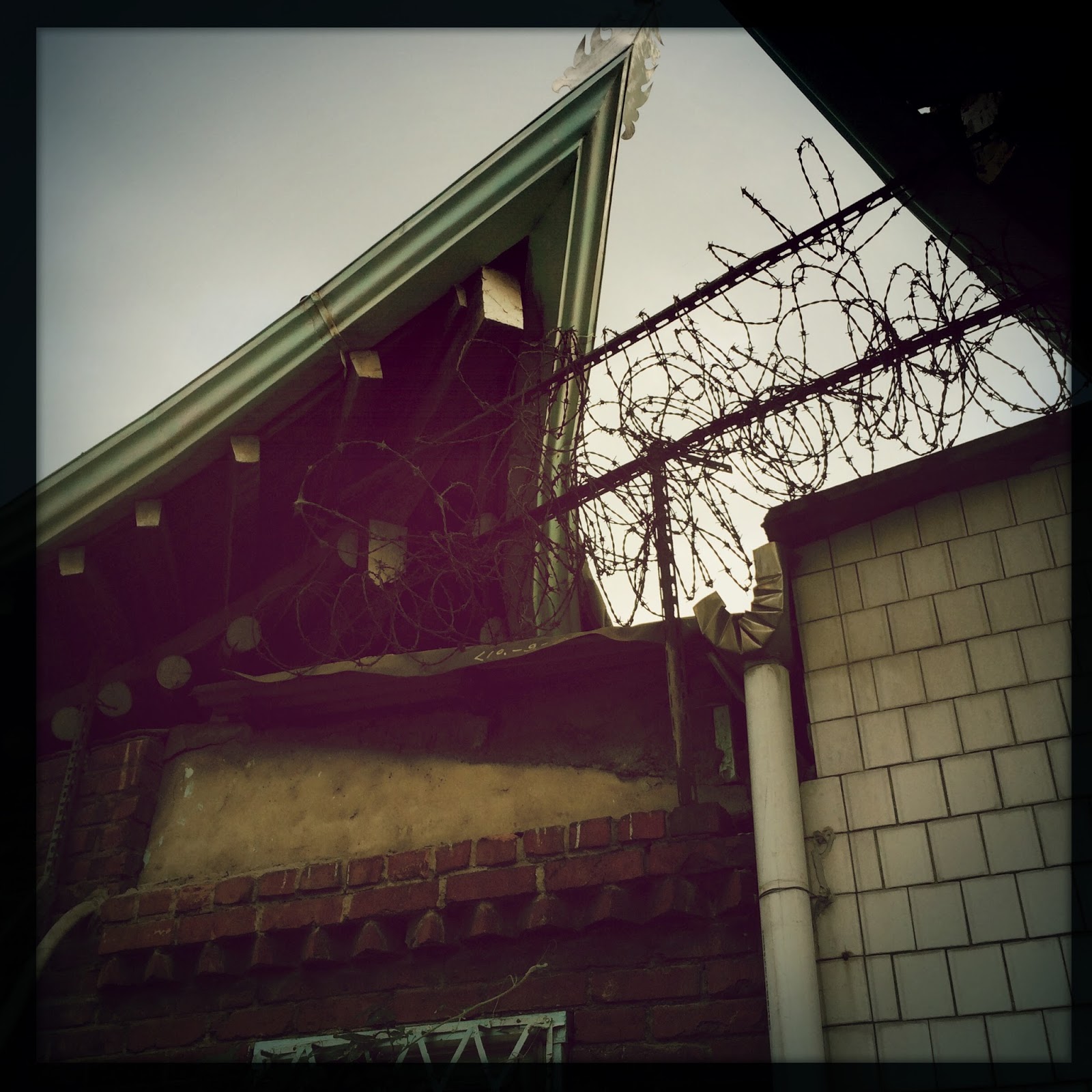
My feet were killing me, but my soul was still aching to see the old wall. Finally, the old barbed wire and merchant doors came into view. Had my mother knocked on these doors? Had she looked at the barbed wire with worry?


Finally, I spotted the blue tile.


I dream in Korean now. I dream of these old streets of vendors and warehouses. I dream of a pregnant woman going about her business and imagine the in utero sounds I might have heard as she purchased herbal remedies.

That one day in the neighborhood disappointed me but also gave me a sense of who I am … a Korean.


26 August 2014

“A DNA test is only as good as the database.”

I am riding on the bus … to O’hare for my trip to Korea. I am filled with so many emotions, I cannot fully explain them in words.

Having said that, the reality of the search hit me hardest when the itinerary for my trip arrived. In the next day or so, I will be swabbed for a DNA test. Many of my Lost Daughters’ sisters have already had such a test. They have found so many things about themselves via 23andMe and Ancestry.com.

I have always toyed with the idea of the DNA test in my mind, but this summer at KAAN, as I listened to the words of Bonnie LeRoy, I felt ambiguous relief as she said, “A DNA test is only as good as the database.”

For the domestic adoptees of the Lost Daughters, the test has in some cases been successful. Hearing Dr. Lee’s words, I realized that such a test may not be plausible for me, a Korean born adoptee. In order for my DNA to match someone in Korea’s, that person would need to test and access DNA records in the United States to find me.

As you know, the reasons for my search began with my children’s curiosity but have ended with my hope to never rob my birth mother. I feel as though I take one step forward, then pull myself two steps back. While I want to do this for others, I am not sure I want this for myself.


The prospect of this DNA test in Korea has made it all the more real. When I sit on my sofa in Wisconsin, there are many “what ifs” I can ponder, but to set foot in Korea and add my DNA to other Koreans’ …

19 July 2014

The Ceramicist in Me … could it be the ceramicist in her?

A new Korean adoptee friend sent me this fantastic video:


Watching the masters carve, I felt as I do when I carve … a release. It’s cathartic, and my tears flowed. They were tears of joy and sorrow flowing together … the epitome of my life experience thus far. I wonder whether someone else in my biological family ever felt this same feeling … the release. Does my natural mother weep and think of me when she carves, as I do for her?

I had a flower carved and ruined it with glaze, but I now am recreating it with the knowledge of what I learned from the mistake.

Here’s the beauty of it before the glazing. My family tree is a fully enclosed flower.


The family tree haunts me in a way I cannot describe. I feel rootless and lost. But the flower … it reproduces, it symbolizes the beauty of connection with others. It can live a little without the roots when it is severed.

The petals are the only part I retain from my natural family, and the new flower shows them as the background to the petals from my adoptive family. Stay tuned for more photographs as this new flower blooms.

10 July 2014

#TBT

It’s Thursday. The feed floods with remembrances of babies, youngsters, bad hair days, 70s disco dress and 80s rebel wear. Proof we lived through the 80s.

Here’s one:


Seriously … bad.

I love seeing the photographs of others’ siblings and parents. The similarities in their anatomical features: the similar smiles, the same stance, mirrored features.

Last week, someone posted a photograph of her brother as a child. It was amazing to see her biological children’s faces in this image taken many years before they were born. I found myself typing about the similarities, but then, I stopped myself. She has one son who is adopted. Quickly, I hit the delete key.

Knowing her son might see my comment, I wanted to spare him the sadness of never sharing the sameness. I know that sadness; however, it was often tempered with my family forgetting my foreignness.

The birth of my children solidified my biological place in my own little family. I realize for many adoptive parents who, like my own, never thought they would see their eyes gaze up at them, that fact is so very difficult to bear. I empathize. I understand the joy an adoptee can bring to a childless couple … how we ease the pain. Yet, here I implore adoptive parents to recognize and address the added pain their adopted child experiences when she has no physical frame of reference.

Selfishly, I finally delight in the comments, “Oh, your son and daughter look just like you!” Bear with me. This time of seeing myself in another human being has brought me joy amidst the childhood pain of never experiencing this reflection of self in someone else.

22 October 2013

Perfection is a Façade

An article on Carol Shipley’s new book, Love, Loss and Longing: Stories of Adoption, took my breath away this morning.

Her words had played out in my head for so many years. She said she wanted to be the voice for the voiceless. I had lost my voice years ago. I gave up to become what society wanted me to be.

I became white, Puerto Rican, and an academic over-achiever. My parents glowed as they would say, “It’s not us. She’s naturally smart. She’s so neat and intelligent. It’s in her genes.” They were proud, and I wanted to please them.

My academic achievements were also driven by my outward appearance. As an Asian, I was viewed as a mathematical genius. Teachers and college professors would encourage me to pursue mathematics. Mathematics did come naturally to me, but I yearned to express myself in words and artwork.


Shipley is quoted in the article saying that adoptees internalize an “adoption bargain” that manifests in the need “to be a perfect model daughter so the choice that the adoptive parents made will have been worth it.”

While I know my parents would love me no matter my performance, internally, I struggled with myself to be perfect in every way. I still exhibit this as an adult. I want to be the model parent, the model wife, the model person. As I spiral, I see this quality in my son. He also wants that perfection. He fears failure. Good grades are often not enough for him. I want to help him, but I still find myself struggling with the same demons.

Is there a person in Korea who could help me? Or did that person fear failing in parenthood? By all accounts, she did an excellent job in nurturing me until I was six months old. Her care and nursing has kept me healthy, and I have passed on her flora to my own children.

Here’s where my feelings rush in. I wonder about her and have since that first moment I knew I was pregnant. Not being able to ask her what she felt as I moved underneath her skin is a difficult feeling to suppress.

Shipley says, “The adoptee goes through life not wanting to hurt others, and in doing so, buries her own hurt.”

As a child, my hurt was recorded privately in journals. There are volumes of journals in our basement, spanning the days of “I love Donny Osmond,” to this blog. My emotions rush out on paper or over the keys. I also put much of my energy in trying to help others who might be in need or hurting. Social activism is my outlet. And sometimes, the hurt for others overcomes me.

This blog has helped me to know that others are out there hurting as I have. It has been a cathartic journey. I thank you for following; it heals me.